
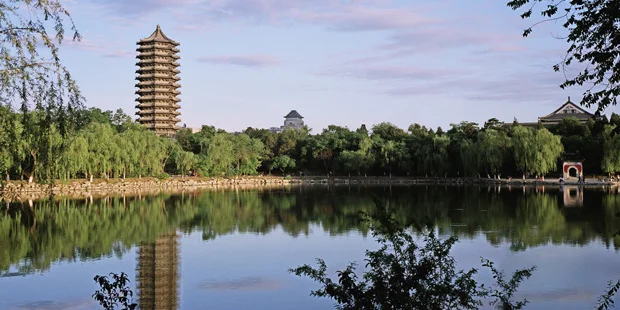
The letter below contains important information for the survey at the bottom. Please read the letter before you complete the survey. Thank you!
Dear FACES Delegates,
Greetings from FACES Beida! Next month, we will meet again in Beijing for the second leg of the FACES Annual Conference. First of all, we would like to extend a warm welcome! In order to best suit your academic interest and maximize your experience during the Conference, we would like to know your preference on two critical components of the Conference--the academic activities and the Beijing city tour.
Based on your feedback after the Stanford Session, we decided to not organize parallel forums or divide delegates into separate topic groups; instead, we design the academic activities in a way that enables all delegates to focus on the same topic at the same time. In total, there will be three topics with a series of activities (group discussions, lectures, and etc.), each of which is approximately 4 hours. You will need to submit your preference for the four topics provided below. The three most popular ones will become the topics at the Beida Session.
For the city tour, the FACES team at Beida has come up with three routes that include the best of Beijing for you to see and taste. All details are provided below. Please submit your order of preference to help us decide.
If you have any question about any information provided below, please feel free to email the FACES Beida Team at facesbeida1415@gmail.com.
Topics for Academic Activities
Topic 1: Individualism and Collectivism
At FACES, we are always trying to stay critical of any labels. We see facile generalizations and stereotypes as enemies of true U.S.-China mutual understanding. They may help us as starters in understanding one nation, but the deeper we dive, the more we need to go back to scrutinize these stereotypes and arrive at more nuanced understanding of the culture and society of a nation. That’s why we are interested in the topic: individualism and collectivism. For long many people seem to have a fixed conception that Chinese society is a collectivistic one and US individualistic. To what extent are these labels (not) valid? Is American individualism a myth? Will and to what extent will Americans defend individual over collectivity? How does individualism fit into Chinese social reality?
We hope the discussion could make delegates aware of the trap of stereotypes and empathize with the other side how it feels like to be an individual in Chinese or American society.
Through case studies and group discussion, we will help delegates assess examples of individualism and collectivism in US and China. Materials and cases from life and media will be provided for critical assessment. Personal observations and understandings are also welcome.
Topic 2: Democracy
Since ancient times, Democracy has been endlessly contemplated and pursued, by philosophers, politicians, and the people. Today it still arouses gigantic concern, contention, and confusion. In particular, much misunderstanding between the U.S. and China arise just around this issue. So here at the FACES conference, let us have a candid talk.
A wide array of issues may be discussed and debated here regarding democracy, either on the whole – the criteria and the ultimate goal of having a democracy – or more specific discussion on democratic practices in the two countries: its status quo, future development and possible ways for improvement. Either way, we hope to assess the realities of democracy in both countries, especially what democracy means in China, before we build on to compare and contrast.
Apart from discussion, we would like to organize a mild debate on questions such as “In your opinion, does China have real democracy?” Another possible activity is to simulate democratic processes in China and the U.S. in which Chinese and American delegates are presented with an issue and display the decision-making process.
Topic 3: Minorities
They used to be the deserted, disrespected and disintegrated people of our society. Peculiar, bizarre or avant-garde, whatever adjective is being used, they were human beings who simply do not fit into social norms. They are the minorities.
As minorities begin to attain a stronger influence, the story has taken a turn these years. On both sides of the Pacific Ocean, calls for respect and for equal rights are growing day by day. While we begin to accept a wider range of diversity, it has never been easy for all people to understand what they are seeing. Almost in pace with the rise of minorities comes the discrimination against them. How are minorities faring today? And how are their roles different in China and America? From the majority’s perspective, what are the impressions of the minorities? What stands do the media and the government take towards the minorities?
Value orientations and religious reasons are at the core of discrimination. How have value orientation evolved through the years? Why is religion used as an excuse to discriminate social minorities? Does the perception of minorities differ from generation to generation, in both China and America?
Videos, surveys and interviews may be carried out to promote mutual understandings on social minorities in both countries.
Topic 4: National Image and Patriotism
American government and Chinese government are both constructing their own national images, internally to their people and externally to other nations. However, good intentions do not always produce the results desired, and that is what sparked our interest. How does China perceive America as a nation? And what’s it like the other way around? While we interpret the action of another nation, are there any misconceptions? Is America, as it appears sometimes to China, a country too eager to spread its own beliefs that they engage themselves militarily in too many regional wars, or is it proliferating the spirit of freedom and democracy? Is China a country of intensive censorship and the new colonist of West Asia and Africa, as it sometimes appears to the U.S., or is it embarking on the road to prosperity and peace?
Apart from national image, there’s the controversial term “patriotism”. We have sensed that, there are different understandings of what constitutes the love for one’s own nation. Without doubt, all people hope for their nation to bring prosperity and quality of life for the citizens, and the government is tasked with this goal. However, the perception towards the government is different among people of two countries. Act of opposing governmental actions can be regarded as patriotic in U.S., however it may not happen in China.
We plan to drive this discussion through case studies such as Snowden and “Wumao Dang” in China, while supplemented with surveys and interviews.
Beijing City Tour
Route 1:
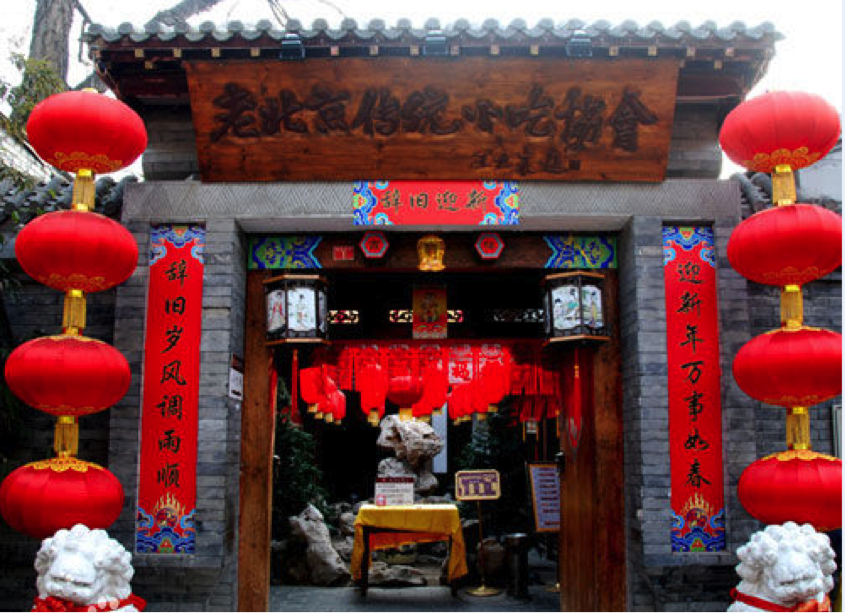
Nine-gate Traditional Snack Restaurant
Good news: Here you can enjoy all kinds of traditional Beijing food, and it’s authenticity guaranteed. Nine-gate Traditional Snack Restaurant provides dinners with the very best of traditional Beijing food, such as stir-fried liver Beijing style, fried jackfruit and milk soup Beijing Style . You don’t need people to tell you to help yourselves. Before you realize, your mouth is already chewing away.
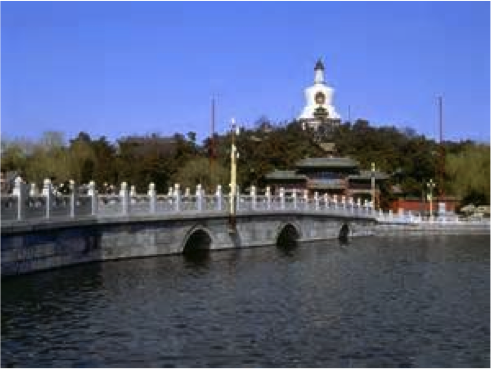
Běihǎi Park
Běihǎi Park, northwest of the Forbidden City, is largely occupied by the North Sea (Běihǎi), a huge lake that freezes in winter and blooms with lotuses in summer. Old folk dance together outside temple halls and come twilight, young couples cuddle on benches. It’s a restful place to stroll around, rent a rowing boat in summer and watch calligraphers practicing characters on paving slabs with fat brushes and water. Find more at http://www.lonelyplanet.com/china/beijing/sights/parks-gardens/beih-i-park.
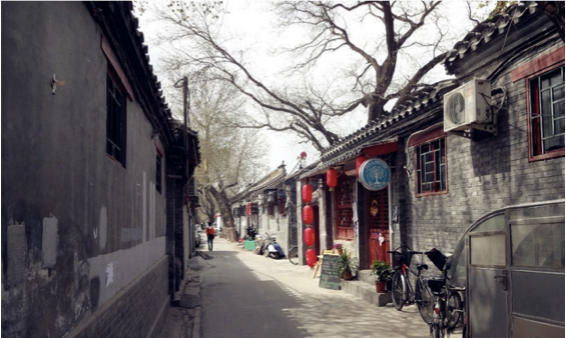
Nánluó Gǔxiàng
Once neglected and ramshackle, strewn with spent coal briquettes in winter and silent bar the hacking coughs of shuffling old-timers and the jangling of bicycle bells, the funky north–south alleyway of Nánluó Gǔxiàng (literally ‘South Gong and Drum Alley’, and roughly pronounced ‘nan-law-goo-syang’) has been undergoing evolution since 1999 when Passby Bar first threw open its doors, and was the subject of a complete makeover in 2006. Today, the alley is an insatiably bubbly strip of bars, wi-fi cafes, restaurants, hotels and trendy shops. Find more at http://www.lonelyplanet.com/china/beijing/sights/neighbourhoods-villages/nanluogu-xiang.
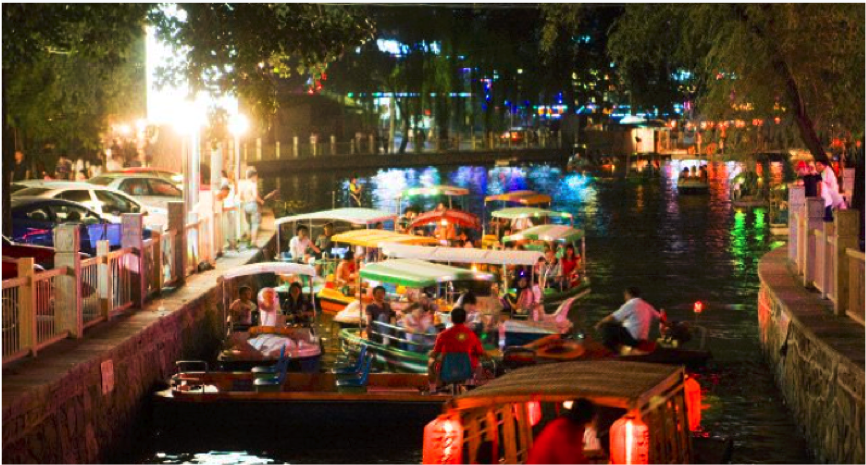
Hòuhǎi
The name of an artificial lake in a former imperial garden. Now a park, its name literally translates as “the sea in the backyard”. The old Chinese language often uses the term “sea” instead of “lake”.
Find more at http://www.lonelyplanet.com/china/beijing/sights/other/houh-i-lakes
Route 2:
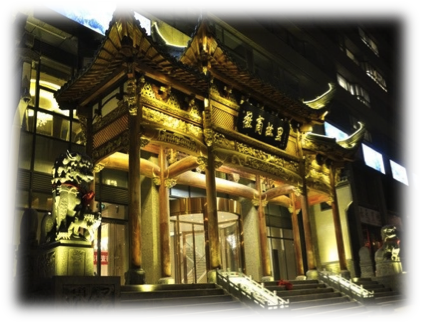
Huīshāng Gùlǐ
This is the name of a restaurant. It literally means “the home of merchants from Anhui”. Anhui is the name of a Chinese province.
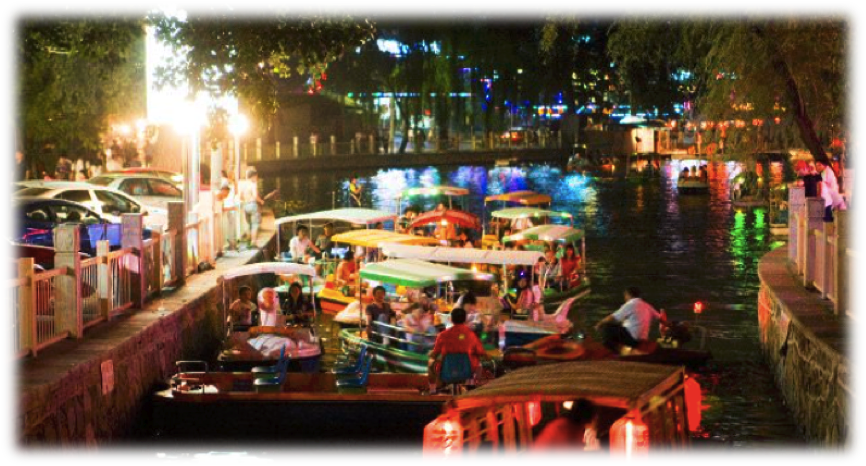
Hòuhǎi
The name of an artificial lake in a former imperial garden. Now a park, its name literally translates as “the sea in the backyard”. The old Chinese language often uses the term “sea” instead of “lake”.
Find more at http://www.lonelyplanet.com/china/beijing/sights/other/houh-i-lakes
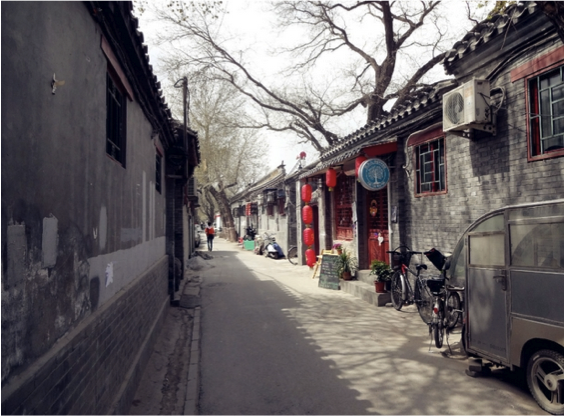
Nánluó Gǔxiàng
Once neglected and ramshackle, strewn with spent coal briquettes in winter and silent bar the hacking coughs of shuffling old-timers and the jangling of bicycle bells, the funky north–south alleyway of Nánluó Gǔxiàng (literally ‘South Gong and Drum Alley’, and roughly pronounced ‘nan-law-goo-syang’) has been undergoing evolution since 1999 when Passby Bar first threw open its doors, and was the subject of a complete makeover in 2006. Today, the alley is an insatiably bubbly strip of bars, wi-fi cafes, restaurants, hotels and trendy shops. Find more at http://www.lonelyplanet.com/china/beijing/sights/neighbourhoods-villages/nanluogu-xiang
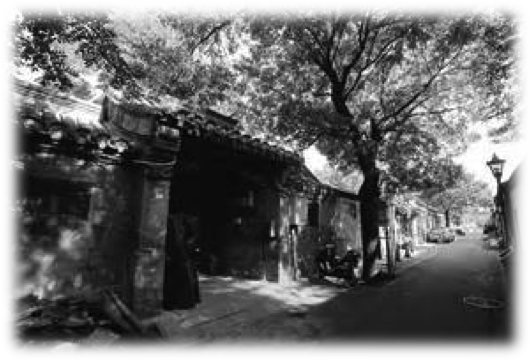
Hēizhīma Hútòng
The story of the Hēizhīma Hútòng can be traced back to the Ming Dynasty – that was when the Tudors were still struggling with the Roman Catholics. Literally translates as “Black Sesame Alley”, it represents one of the oldest architecture achievements in Beijing. The residents today still stroll over roads trotted by horse-drawn carriages all those years ago. A lack of commercial activities is probably a blessing in disguise.
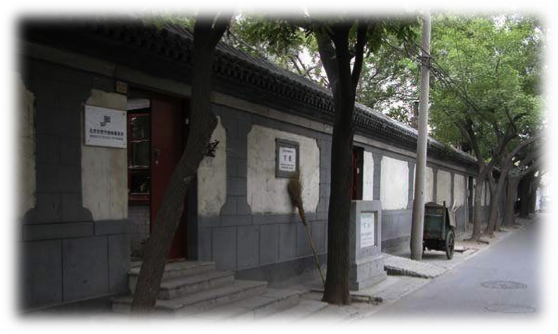
Mào’ér Hútòng
A tranquil alley these days, some of the highest ranked officials and generals used to live along Mào’ér Hútòng. As a result, a wealth of wonderful architecture can be found in the former residences of numerous past celebrities. “Mào’ér” means “Hat” in Chinese, and the name is a tribute to a Chinese god of culture.
Route 3:
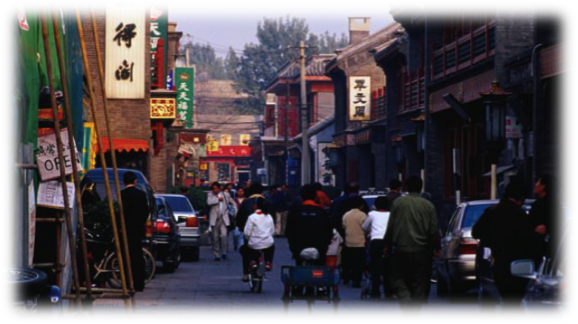
Liúli Chǎng Ancient Cultural Street
Beijing's premier antique street, not far west of Dàshí Làn, is worth delving along for its quaint, albeit dressed-up, age-old village atmosphere and (largely fake) antiques. Alongside ersatz Qing monochrome bowls and Cultural Revolution kitsch, you can also rummage through old Chinese books, paintings, brushes, ink and paper.
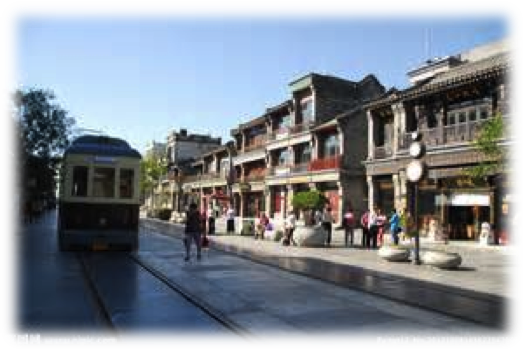
Dàshí Làn
This centuries-old shopping street, also known as Dashilar, is just west of Qiánmén Street. While a misjudged makeover has sadly robbed it of much of its charm, many of the shops have been in business here for hundreds of years and still draw many locals. Some specialize in esoteric goods – ancient herbal remedies, handmade cloth shoes – and most make for intriguing window shopping. Find more at http://www.lonelyplanet.com/china/beijing/sights/historic/dashilar.
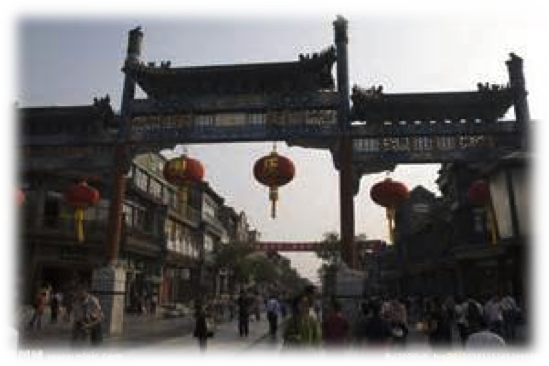
Qiánmén Street
Restored to resemble a late-Qing-dynasty street scene and wildly popular with domestic visitors, this ancient thoroughfare (once known as Facing the Sun Gate Street) is something of a tourist theme park. That said, it is beginning to stir into life as more (over-priced) restaurants and shops open up, while the rebuilt Qiánmén Decorative Arch (the original was torn down in the 1950s) looks handsome. Find more at http://www.lonelyplanet.com/china/beijing/sights/historic/qianmen-dajie.
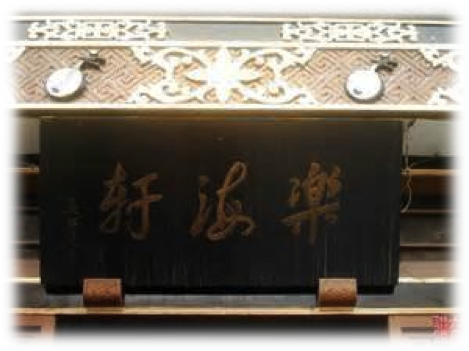
Yuèhǎi Xuān
Fantastic, friendly emporium that specialises in traditional Chinese musical instruments, such as the zither-like gǔzhēng (some of which come with elaborate carvings on them), the èrhú and bǎnhú (two-string Chinese violins), and gǔ (drums). It does great gongs and has many esoteric instruments from Tibet and Mongolia, too. Find more at http://www.lonelyplanet.com/china/beijing/shopping/music/yueh-ixuan-musical-instrument-store.
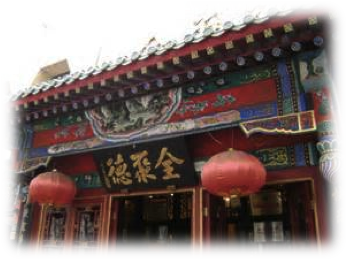
Quánjùdé
The one restaurant that is always at the top of the recommended list of Beijing cuisine. Renowned for its roast duck, Quánjùdé attracts tourists around the world and leaves diners craving for more. You can even witness the cooking process from restaurant windows!
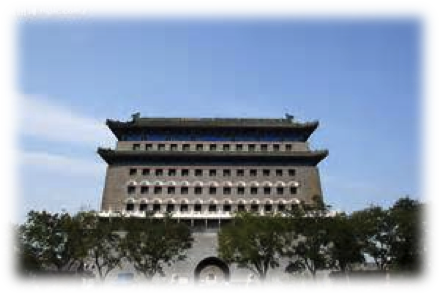
Qiánmén Gate Tower
This 15th-century gate, also known as Zhèngyáng Mén, was once part of the city walls that divided the ancient inner city from the outside world. Find more at http://www.lonelyplanet.com/china/beijing/sights/landmarks-monuments/qianmen.
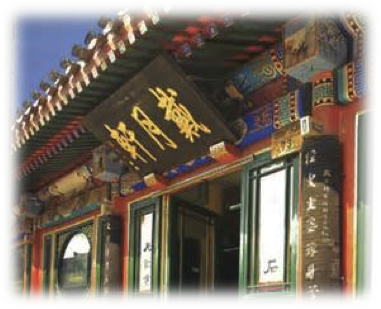
Dàiyuè Xuān
Ancient Chinese people write on paper with a rather long brush. And the ink they used came from inkstones. So brushes, paper, ink and inkstones were regarded as “four treasures” of calligraphy. Dàiyuè Xuān is the time-honored brand of the “four treasures”, and is said to produce some of the best brushes and ink in China. Here, dabble in traditional Chinese art territory and immerse yourself in a nostalgia atmosphere.
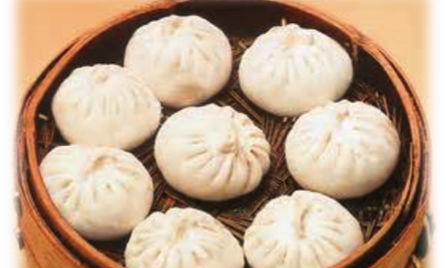
Gǒubùlǐ
Decent, reasonably priced eats are hard to find in this area, so this outpost of the renowned Tiānjīn restaurant will delight dumpling devotees. True, they are more pricey here than at your average hole-in-the-wall joint, but there are eight different types to pick from, including meat, prawn, crab and veggie options, and each serving includes eight dumplings. Find more at http://www.lonelyplanet.com/china/beijing/restaurants/asian/g-ubul
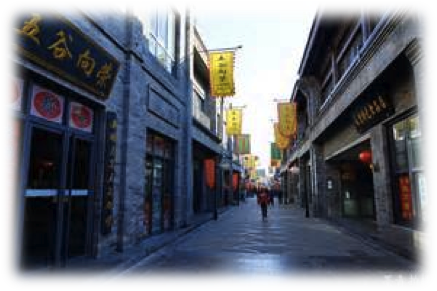
Xiānyúkǒu Snack Street
There are certain kinds of food that are hard to deal with: you simply can’t suppress the desire to devour them quickly, but wolfing them down seems a bit wasteful, considering how tasty they are. This Snack Street is the ne plus ultra. For four hundred years, it has enjoyed a high concentration of delicious snacks. At least it keeps your mouth watered in a dry climate.
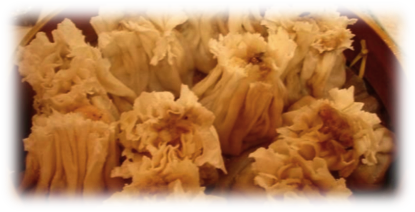
Dōuyīchù
If you manage to get a Chinese emperor attracted to your restaurant, then you are certainly not doing too badly. They shot up in fame with only one type of food – shao-mai. Stuff a lot of sticky rice, a few slices of pork and some peas into the wrapper, and give it some steam, you get a perfect shao-mai. Take a bite.
Please submit the form below by 11:59pm on Friday, February 20 (Beijing Time) or 7:59am on Friday, February 20 (Stanford Time). We appreciate your cooperation and look forward to meeting you in March!
Yours Sincerely,
FACES Beida Staff Team